
 Christmas Knitting Shop
Techniques
The Ultimate Guide to Toy Filling – Safe Stuffing for Knitted Toys

There are many different options when it comes to toy filling, and choosing the right one can be confusing — especially if the toy is for a child. Safety, washability and how the toy holds its shape all matter, which is why choosing the best filling for handmade toys or hypoallergenic stuffing for stuffed animals is just as important as the pattern itself
On the surface at least, toy filling isn’t very interesting. If like me however, you use it to make toys, then knowing all about the toy filling that you use can give you better finished results.
Toy filling is known by lots of names and can vary from country to country. Here are some of the terms I have come across. Toy stuffing, fibrefill, polyflock, wadding, batting, I am sure there are more names for it too.
Why does my choice of filling matter?
Your choice of filling matters because it can significantly change the finished toy look and feel of your toy. For example, you may like recycled poly filling but it will not be completely white. So if you make a toy that is mainly knitted in white then you may see the filling through the finished work and it will not look as ‘clean’ as you would like.
You may decide to go for a wool stuffing and keep to natural fibres. If you are on a low budget and have a large toy to stuff then it may not be an option.
If you are knitting toys for babies or young children, safety should always come first. The filling needs to be securely enclosed, non-toxic and ideally washable. Some fillings that are fine for decorative toys are not suitable for children’s toys, so it’s important to choose carefully.
Think about the receiver of the toy. Will they be children? If so then safety is important and be cautious. Could it be a choking hazard? Does the receiver have allergies or intollerancies to certain materials. It may need to be hypoallrgenic or bacterial resistant. It is all about what is right for you, the recipient and the toy you are creating at the time.
If you’re knitting toys, you may also find our toy knitting patterns helpful
What are the legalities of toy stuffing?
If you plan to give away or sell a toy that you have made then there are certain laws to consider. I am not going go into too much depth here as it is another topic completely. You will need to CE Mark and test your finished toys. There is a GOV.UK article here all about it.
It is possible to purchase safe and tested stuffing that is ideal for handmade toys and hypoallergenic stuffed animals if giving as gifts or selling. Ask the toy filling retailer before you purchase to see any certificates they have on safety tests of their stuffing if you plan on selling or giving away. Keep them and add them as your compliance evidence.
The finished items still need to be safety checked by you before you can add the CE mark to your toys as the law applies to the finished article and not component parts. All CE testing must be made on new materials so recycling your filling is out of the question here too.
What can I use as a toy filling?
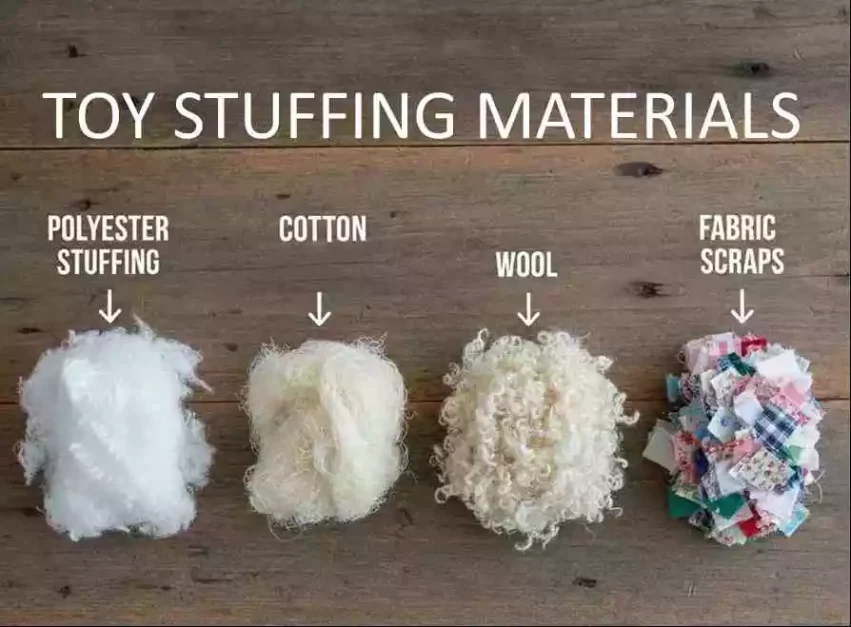
There are so many options for you to fill your toys with. Here is a long list of things that you could use to stuff your toy with.
- Polyester / Acrylic toy stuffing (most popular) – This is the most commonly used option for knitted toys as it is lightweight, washable, and generally safe for children.
- Cotton stuffing – Cotton is a natural option but can become heavy or lumpy over time, especially if the toy needs washing.
- Wool – Wool gives a traditional feel but is best used for decorative toys, as it may cause allergies and can attract moths.
- Fabric scraps – Fabric scraps can work for adult or decorative toys, but they should be avoided for children’s toys as they are harder to clean.
- Bamboo – Bamboo stuffing is a natural alternative, although it is less commonly available and not always suitable for washable toys.
- Old socks – Old socks filled with stuffing can be used inside larger toys, but they must be securely enclosed and are not ideal for children’s toys.
- Old clothes shredded – Shredded clothing can be reused as stuffing, but it may create an uneven finish and is better suited to non-washable or decorative toys.
- An old stuffed toy – Reusing stuffing from an old toy is possible, provided it is clean, dry, and in good condition.
- Shredded paper – Shredded paper is not recommended as it breaks down easily and does not cope well with moisture.
- Tissue – Tissue paper can be used for temporary shaping but will quickly lose its structure and is not suitable for long-term use.
- Pillow filling – Pillow filling is similar to polyester toy stuffing and can work well if it is clean and in good condition.
- Recycled cushions / quilt filling – This can be a practical option for larger toys, but the filling should be evenly distributed to avoid lumps.
- Old packaging materials such as bubble wrap – Bubble wrap can be used to bulk out larger toys, but it should not be the main stuffing and is unsuitable for children’s toys.
- Lavender or dried flowers (makes the toy smell nice) – These can add a pleasant scent but should only be used in decorative toys, as small pieces can escape if the toy is damaged.
- Rice (can be used to add weight but watch if there is a chance of vermin) – Rice is sometimes used for weighting, but it should be fully sealed and avoided in toys for children.
- Beads (in combination with other stuffing to give it a different texture) – Beads can add weight or texture but must be securely enclosed to prevent them escaping.
- Polystyrene beads – Polystyrene beads are lightweight and mouldable, but they are messy and unsuitable for toys intended for children.
- Sand (wrapped up of course, adds weight) – Sand can add weight when securely wrapped, but it should only be used in display or adult toys.
- Fish tank gravel (again to add weight) – Gravel can be used for weighting larger toys, but it must be well sealed and kept away from children’s toys.
Quick Guide: Best Stuffing for Handmade Toys
| Age / Use | Recommended Stuffing | Notes / Tips |
|---|---|---|
| Babies & Toddlers (0–3 years) | Polyester / Acrylic fiberfill | Lightweight, hypoallergenic, washable. Ensure all seams are secure. Avoid small beads or weighted fillers. |
| Toddlers & Older Children (3–6 years) | Polyester / Acrylic fiberfill, Cotton | Safe and cuddly. Cotton can clump when washed; make sure seams are strong. |
| Decorative Toys / Collectibles | Wool, Cotton, Bamboo | Natural fibers give a traditional feel. Not ideal for washable toys. |
| Weighted Toys / Sensory Play | Rice, Beads, Polystyrene Beads (enclosed) | Must be securely wrapped inside the toy. Adds tactile variety and weight. Not suitable for children under 3. |
| Eco / Recycled Options | Fabric scraps, Old Pillow Filling | Good for decorative or non-washable toys. Avoid for very young children. |
| Scented Toys / Aromatherapy | Lavender, Dried Flowers | Adds fragrance, best for decorative toys. Ensure flowers are enclosed to prevent leakage. |
What do I need to consider when choosing a toy filling?
How much filling do you need to buy to fill your toy? This is a really tricky question to answer as different types of toy filling have different densities and you may prefer to stuff your toy a little firmer or lighter as you desire.
A 1kg bag of stuffing will have a different volume or size depending on what it is made from and how much air there is inside. New toy stuffing is sold by weight. This is why none of the Knitting by Post knitting patterns specify a stuffing quantity as it would be impossible to accurately measure as the weight has no bearing on the volume needed to stuff a toy completely.
If you plan on sending your finished toy abroad for any reason – e.g as a gift or if it has been sold. Be aware that if you use natural fibres such as bamboo or lavender inside, that you will have to declare them as the enter the country.
If you are recycle mad like me, then find something soft and squisy and get to it! It is good fun if you want to keep the toy yourself and experiment with different materials. You don’t have to use just one material, I make little bags to weigh down my toys with uncooked rice and add cotton stuffing round the edges.
Carding a filling product makes it more light and fluffy as it goes through a carding machine and introduces air. It is possible to buy uncarded toy stuffing and this is more dense and works well if you want a very firm and weighty toy.
What are the toy specific types of filling I can buy in the shops?
Polyester and Acrylics
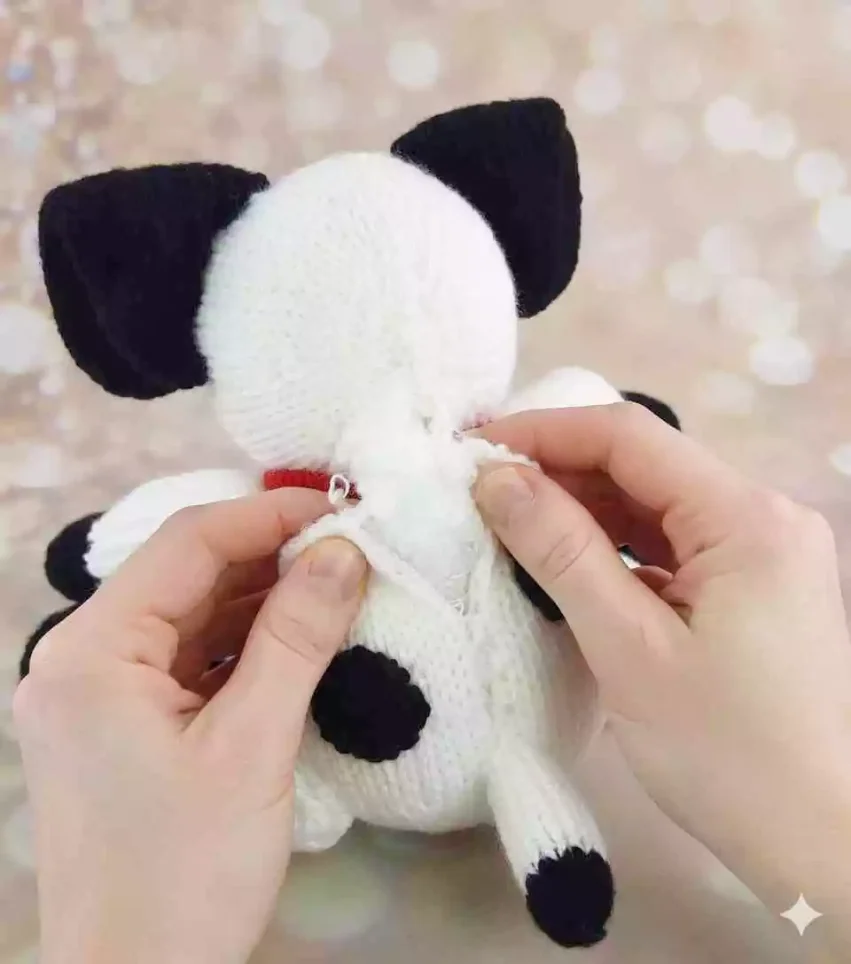
A non-natural product that is inexpensive on the pocket and is also widely available. Most haberdasheries in the UK will carry a stock of this kind of toy stuffing. If the man-made element doesn’t bother you too much, it is good for toy stuffing as it has a consistent feel throughout and will give your finished toy the same feeling.
It can be good if you have large toys to fill as it is less dense than other kinds of filling and goes further by weight. If they are labelled high-loft this means that there is lots of air in it and it will be more bouncy.
Polyester filling can be siliconized. This means that the fibres of the filling are produced in such a way that they will minimise an allergic reaction (hypoallergenic). Siliconized polyester filling is designed to resist bacteria and dust. The filling may can be washed but take care with your toy as the fibres absorb heat and it may be difficult to remove stains.
This makes polyester toy filling the best all-round choice for most knitted toys, particularly those made for children.
Large Print
Knit One, Fetch Fun – A Dalmatian With A Hidden Treat In His Tummy.
Large Print
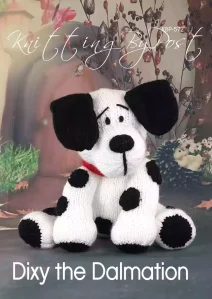
Spot the fun in knitting! Dixy the Dalmatian is a soft toy pattern that’s as playful as a real pup—no house training needed.
Download
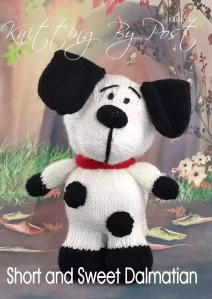
Puppy love in every stitch! Knit a small, cuddly Dalmatian toy with this beginner-friendly pattern.
Cotton
If keeping things natural is your thing then Cotton filling is great. It is more dense than the man made alternatives and may also come in an organic version too.
If you plan on washing your finished toy – maybe it is going to be given to a child then purchase cotton that is pre-shrunk as it may get a bit smaller after a wash.
Wool or Lambswool
An animal based natural fibre from sheep. If you make toys with natural fibres, it may make sense to use a wool based toy filling too. Sheep have been around for thousands of years so it would make sense that early soft toys were stuffed with wool too. Wool toy stuffing can also come carded and uncarded. It is also a bio-degradable material and is naturally fire resistant.
Natural fillings like cotton and wool are better suited to decorative or adult toys rather than toys intended for young children.
So which one do I use?
It is entirely up to you what materials you choose to fill your creations with. There are up and down sides to using all the different kinds of fibrefill. Hopefully you have read this article and can make a more informed choice for your knitted toys.
Quick Tips for Stuffing Success
- Even distribution is key: Stuff toys firmly but evenly for a polished shape.
- Secure seams: Use a Double-stitch or use strong yarn, especially for baby toys.
- Washable materials: Choose polyester/acrylic for toys that will get frequent cleaning.
- Age-appropriate: Avoid beads, rice, or small parts for children under 3.
- Eco-conscious options: Reuse clean fabric scraps or pillow filling for adult or decorative toys.
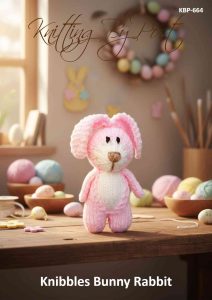
There's Some Bunny Business Going on Here. He is a Small, Quick and Easy to Knit Easter Bunny Knitting Pattern.
This product has multiple variants. The options may be chosen on the product pageLarge Print
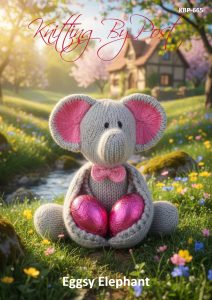
Grey-T News, Eggsy Elephant Knitting Pattern Holds Easter Eggs Too.
This product has multiple variants. The options may be chosen on the product pageLarge Print
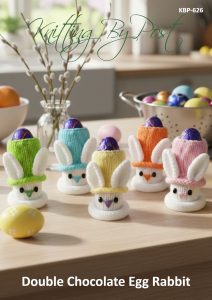
Shell-ebrate Easter with this sweet egg cosy knitting pattern. Fit a creme egg in the head and another in the hat.
This product has multiple variants. The options may be chosen on the product page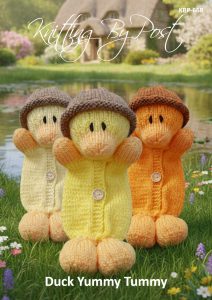
Don't ruffle your feathers, this duck pattern is sew cute and has a pocket for treats too.
This product has multiple variants. The options may be chosen on the product page
A pattern so sweet, it'll make your heart thumper. Here is a cute purple bunny rabbit ready for Easter.
This product has multiple variants. The options may be chosen on the product pageLarge Print
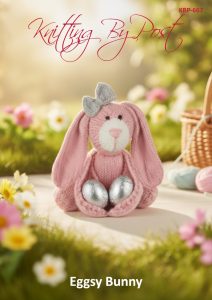
Ears to a fun and creative knitting experience. A knitting pattern for a bunny with chocolate Easter egg holder.
This product has multiple variants. The options may be chosen on the product page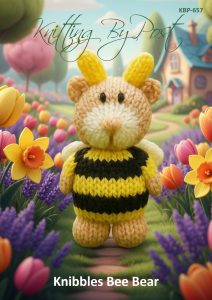
Honey, I've found the perfect pattern, there is a buzz of creativity here with this bee bear combination.
This product has multiple variants. The options may be chosen on the product page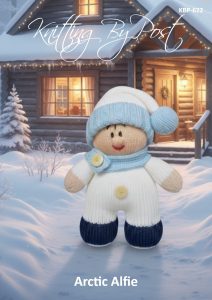
This little snow ready dolly is un-brrr-lievably cute and easy to make.
This product has multiple variants. The options may be chosen on the product pageOther Sources and Official Toy Safety Guidance
EN 71 is the European standard for toy safety, defining requirements for mechanical performance, flammability and chemical content in toys intended for children. While it is a legal requirement for products sold in the EU, many handmade toy makers use EN 71 as a useful guide to ensure their materials and construction meet recognised safety benchmarks.” — EN 71 – Safety of Toys
Australia The mandatory safety standard requires toys for children up to and including 36 months to comply with design and construction requirements to reduce hazards like small parts and choking risks.”
— Consumer Goods (Toys for Children up to and including 36 Months of Age) Safety Standard 2023, Australian Product Safety ACCC Product Safety
USA The Consumer Product Safety Improvement Act of 2008 (CPSIA) strengthened safety requirements for children’s products, including toys, and requires compliance with safety standards like ASTM F963. Wikipedia Link Here
UK/EU toy laws state toys must not jeopardise health or safety when used as intended, and must include appropriate warnings or instructions. — UK Toys (Safety) Regulations

 My Account
 My Orders
 Free Knitting Patterns
 Information
 Blog
Blog Contact Us